
TravelTech Marketing Agency
Traveltech Marketing Agency for Travel Companies
Revenue managers, hotel GMs, and corporate travel buyers evaluate vendors carefully and trust earned content over paid reach. Voxturr builds marketing programmes for traveltech companies calibrated to the specific buyer, market, and channel that generates real pipeline.
Traveltech Is Not One Market. The Marketing Needs to Reflect That.
A hotel distribution SaaS selling to revenue managers at global hotel groups operates in a completely different buying environment from a corporate travel platform generating B2B leads from Indian enterprises, or a hotel chain franchise looking to drive direct bookings and local awareness from specific US cities. The buyer is different. The buying process is different. The channel that reaches them is different.
Most marketing agencies apply a single framework to every traveltech client. Voxturr builds the programme around the specific buyer, the specific product, and the specific market, because the approach that builds pipeline for a Swiss hospitality SaaS is not the approach that generates corporate travel leads in Bangalore or drives hotel occupancy in Denver.
Verticals We Have Experience In
From hospitality distribution to corporate travel procurement, the segments we know and the buyers inside each.
Hotel Distribution and Revenue Management Technology
Channel managers, booking engines, GDS connectivity, PMS integration, and revenue management platforms sold to revenue managers and distribution directors at hotels ranging from independents to global chains.
Hotel Chains and Franchise Operations
Marketing support for hotel brands and franchise operators focused on direct booking growth, local market penetration, and occupancy improvement across specific geographies.

Corporate Travel and Travel Management
Managed travel platforms, corporate booking tools, and travel management services sold to procurement, HR, and finance teams at companies managing employee travel spend.
Travel Services and Experiences
Consumer and B2B travel services companies building digital presence, generating inbound enquiries, and growing qualified pipeline from travellers or corporate buyers across specific markets.
Traveltech Marketing Services Built
For The Buyers You Are Trying to Reach
Every service is selected by buyer type and market. The channel mix for a hospitality SaaS is different from a hotel franchise, and we build accordingly.




Three Buyer Types. Three Completely Different Playbooks.
Each traveltech buyer has different evaluation criteria, different channels, and different content that earns their attention. We build accordingly.
Hospitality SaaS and Hotel Technology Platforms
Revenue managers, general managers, distribution managers, and C-suite leaders at independent hotels, hotel groups, and management companies evaluating channel managers, booking engines, PMS integrations, and payment platforms.
LinkedIn content and demand generation targeting hoteliers by property type and market. Newsletter programmes building a recurring relationship with hospitality professionals. SEO and landing pages targeting hotel technology search intent. Lead generation calibrated to demo-booking conversion.
Corporate Travel and Travel Management Companies
Corporate travel managers, procurement heads, HR leaders, and CFOs at companies managing employee travel spend, evaluating travel management platforms, corporate booking tools, and managed travel services.
B2B lead generation targeting corporate travel buyers by company size, industry, and geography. LinkedIn outreach, lead magnets around travel policy and cost management, and email nurture sequences that move prospects from awareness to qualified conversation.

Hotel Chains and Franchise Operators
Franchise owners, regional directors, and marketing managers at hotel chains and independent properties evaluating marketing support, occupancy growth, and local lead generation.
Geo-targeted performance marketing on Google and Meta driving direct booking enquiries from specific markets. Local SEO ensuring the property appears for the right searches. Lead generation producing qualified direct enquiries for specific locations and seasons.

Want to see what more we’ve worked on?
View All Case StudiesTraveltech Marketing Works When It Is Built For The Specific Buyer, Market, And Channel
A revenue manager in Switzerland, a corporate travel buyer in Mumbai, and a franchise operator in Denver have nothing in common except that they all buy travel technology. The programme that reaches them has to reflect that.
Why Traveltech Companies Choose Voxturr
What sets a traveltech-experienced growth partner apart from a generic B2B agency.
Other Firms
With Voxturr
Frequently Asked Questions
Voxturr works across hospitality SaaS and hotel technology platforms, corporate travel and travel management companies, hotel chains and franchise operators, and travel services businesses, covering both B2B and consumer-facing brands across US, European, and Indian markets.
Yes. Voxturr has built precision geo-targeted lead generation for individual hotel locations, calibrating campaigns to the local market, property positioning, and seasonal demand pattern of each location rather than running a single broad national brand campaign.
Full-funnel B2B programmes target travel managers, procurement leads, and CFOs at mid-sized and large enterprises through outbound sequences, LinkedIn demand generation, and targeted content, with lead magnets built around the cost control and policy compliance concerns that drive corporate travel buying decisions.
Book a Free Traveltech Growth Consultation. Voxturr will review your current marketing activity, your target buyer and market, and your pipeline or occupancy goals, then map out what a programme for your specific business would look like.
Yes. Hotel technology buyers, revenue managers, distribution directors, and GMs, have specific evaluation criteria, long decision timelines, and a strong reliance on peer validation. Voxturr builds programmes calibrated to that buying behaviour, drawing on direct experience in the global hospitality market.
Yes, and it’s the primary channel for most B2B traveltech clients. LinkedIn programmes typically combine company content, executive thought leadership, and targeted outreach built for the specific hospitality or corporate travel audience each client is trying to reach.
Turning Ideas into Market Success
Explore how innovative strategies can be positioned, marketed, and scaled to achieve real-world growth and impact.
-
 19 min read
10 Proven D2C Success Strategies for Sustainable Growth
D2C Success Strategies for Sustainable Growth If you are building a D2C brand in India right now, the market has never been bigger or…
Written By
Posted On
Updated
-
 6 min read
Copywriting Secrets Freelance Copywriters Use to Grab Attention
In the fast-paced digital landscape of 2025, where attention spans are shorter than ever, the art of capturing a reader’s interest is paramount for…
Written By
Posted On
Updated
-
 9 min read
Ansoff Product Market Matrix – In Age of Digital Businesses
The Ansoff Matrix, developed by Igor Ansoff, is one of the most valuable frameworks for strategic planning, helping businesses identify growth opportunities through a…
Written By
Posted On
Updated
-
 11 min read
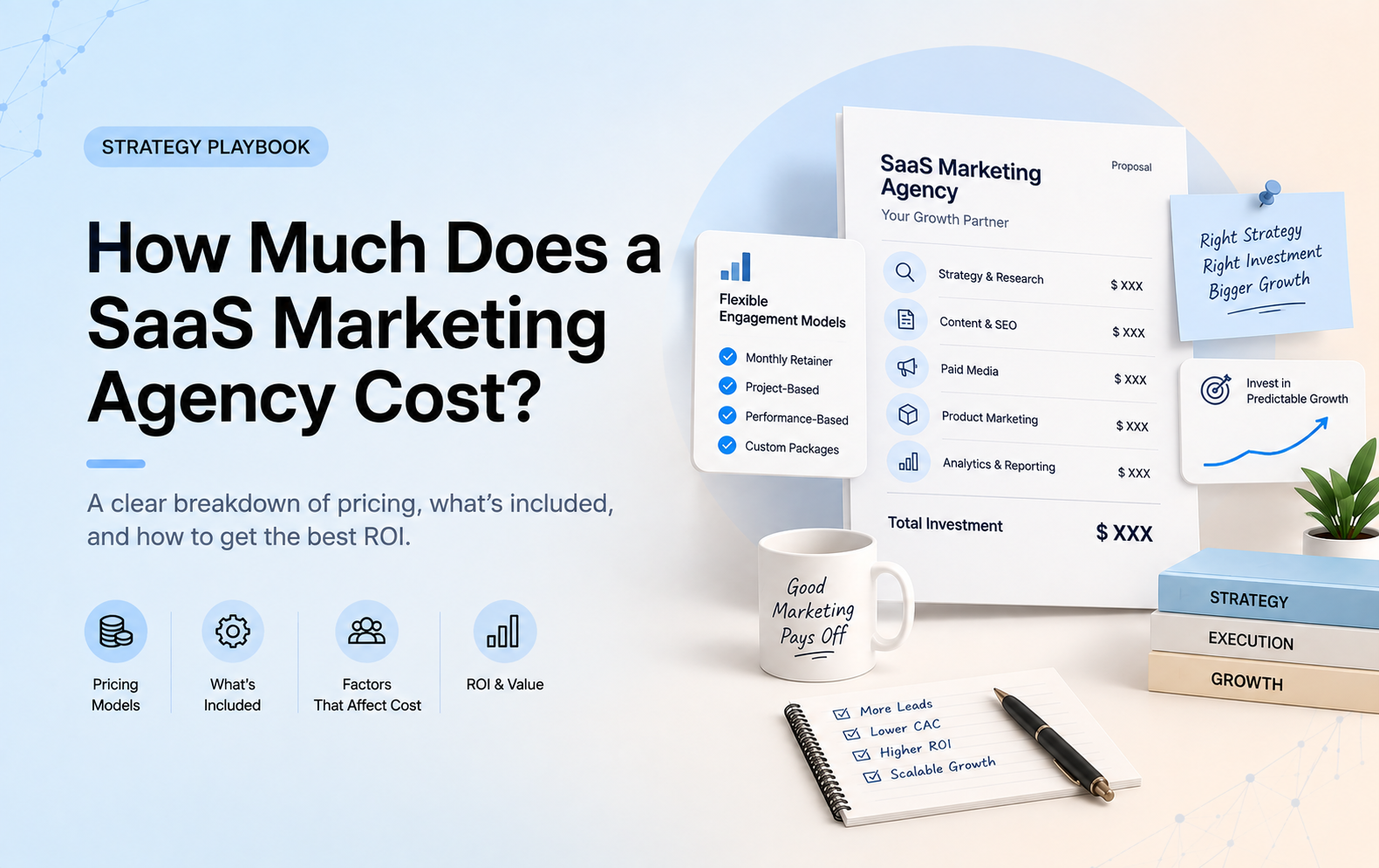
How Much Does a SaaS Marketing Agency Cost?
Having worked with 150+ brands, we’ve built this guide around the questions companies and startups ask most often when evaluating SaaS marketing investments. It…
Written By
Posted On
Updated
-
 4 min read
Do Webinars Help Close High-Ticket Clients in a Strict ABM List?
How Webinars Help Close High-Ticket Clients Getting in touch with high-value prospects in today’s SaaS world isn’t just hard; it’s almost tiring. Direct outreach…
Written By
Posted On
Updated
-
 9 min read
AI-Driven eCommerce Features For Website and Mobile Apps
By 2024, AI has become deeply integrated into eCommerce, with its influence extending to nearly every aspect of online shopping. From personalized product recommendations…
Written By
Posted On
Updated
-
 7 min read
How D2C Brands Are Achieving 5x Revenue Growth Using Performance Marketing
D2C Performance Marketing Strategy Introduction: The Shift in D2C Growth Strategy The Indian D2C ecosystem has evolved rapidly over the past few years. What…
Written By
Posted On
Updated
-
 5 min read
Analytics Agency vs. In-House Team: Which is Right for Your Business?
In 2024, as data analytics becomes more integral to business success, companies can access advanced tools like Google Analytics 4 (GA4), which helps e-commerce platforms…
Written By
Posted On
Updated
-
 9 min read
Business on a Budget – Growth Marketing Tips That’ll Not Exhaust Your Startup Capital
More than 90% of the startups fail within the first 5 years of their inception, and close to 40% fail due to exhaustion of…
Written By
Posted On
Updated
Build a traveltech marketing programme that reaches the right buyer and converts them
Whether you are a hospitality SaaS company building global demand, a corporate travel platform generating enterprise pipeline, or a hotel brand driving direct bookings from specific markets, Voxturr builds the strategy, the content, and the campaigns that produce results in travel.
Project Inquiries
Call Us
Our Offices
USA
71 Stevenson St, San Francisco, CA 94105, United States
India
427, TowerB3, Spaze iTech Park, Sohna Road, Sector 49, Gurugram, Haryana – 122002
Got a Project in Mind?
We care about your privacy, and therefore on submitting this form, we will send you a copy of the signed NDA. Also, by submitting this form, you agree to our T&C and privacy policy.