
D2C Marketing Agency Cost: What Brands Pay and What You Get
Ask five agencies what a D2C marketing agency costs and you will usually get five quotes that do not line up. For example, one charges a flat monthly fee. Another takes a share of ad spend. A third bundles the website, creative and ads into a single number, and a fourth quietly leaves the creative out.
This guide sorts that out. First, it covers typical price ranges in rupees and dollars, the common pricing models, what pushes a quote up or down, how agency fees differ from ad spend, and what to ask before you sign. It also draws on D2C work Voxturr has done, including Kissa Kidswear, High On Chicken and Vajra Jewellery.
One note on the numbers. Agencies publish their own rates, and no neutral industry survey covers D2C pricing well. As a result, the ranges below come from agency sources, and each one names its source. So use them to judge a quote, not as a price list.
How Much Does a D2C Marketing Agency Cost?
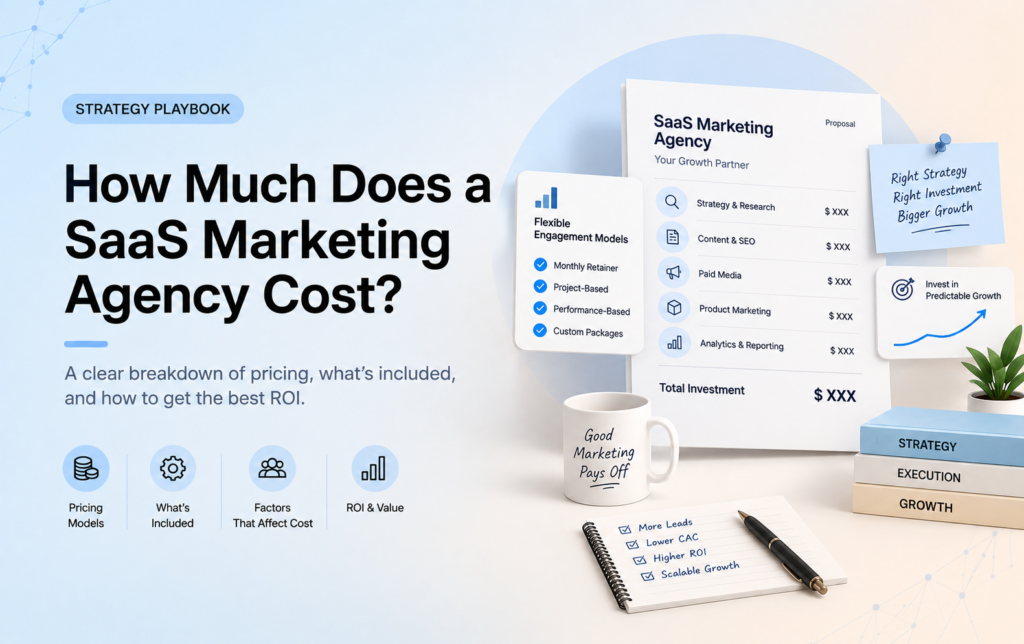
Most published monthly retainers for D2C and ecommerce brands fall between roughly Rs 1.5 lakh and Rs 6 lakh in India, and between $3,000 and $25,000 in the US, with full-stack partnerships reaching far higher. In practice, where a brand lands depends on how many channels the agency runs and how much of the creative and technical work it takes on.
| Scope of work | India (per month) | US (per month) |
|---|---|---|
| One channel, such as Meta or Google, with setup and optimisation | Rs 1.5 to 2 lakh | $3,000 to $10,000 |
| Multi-channel with creative production and landing page support | Rs 2.5 to 4 lakh | $8,000 to $18,000 for one to four paid channels |
| Full funnel across three or more channels, dedicated creative, CRO and measurement | Rs 4 to 6 lakh and above | $18,000 to $25,000 for full paid media coverage |
| Full-stack partnership covering strategy, creative, paid, retention and analytics | Not published in the sources reviewed | $20,000 to $75,000 |
Why the ranges are so wide
Two cautions apply. First, every figure above is a rate an agency published about its own work, not an independent survey, and the two markets are not directly comparable. Second, ranges inside a single source can disagree. Darkroom, for example, gives $30,000 to $75,000 for a full-stack partnership in one place and $20,000 to $75,000 in another. In addition, one cited average for ecommerce retainers is about $14,000 a month, according to Whatagraph as quoted by LimeLight, across a spread of roughly $2,500 to $50,000.
A brand testing one channel should expect the lower end. By contrast, a brand that wants an agency to run acquisition, creative, retention and reporting together should plan for the upper end or beyond.
D2C Marketing Agency Pricing Models
Agencies can price the same work in several ways, and the model changes who carries the risk.
| Model | How it works | Typical figure | Watch for |
|---|---|---|---|
| Flat monthly retainer | A fixed fee for a defined scope | Rs 1.5 to 6 lakh in India, $3,000 to $25,000 in the US (see above) | Scope creep; make deliverables explicit |
| Percentage of ad spend | A share of the media budget, often with a minimum | 10 to 20% is the common range, with complex programmes reaching 30% | The agency earns more when you spend more, which can blur advice on budgets |
| Hybrid | A flat floor plus a lower percentage above a spend threshold | Rs 2 lakh plus 12% $8,000 plus 8% of spend above $50,000 | Check whether the floor or the percentage applies at your spend |
| Performance linked | A base fee plus a bonus tied to ROAS, CPL or revenue | upGrowth suggests a bonus of 10 to 20% of the base retainer | Targets that reward easy wins, and attribution disputes |
| Project fee | A one-off price for a build or a launch | $15,000 to $40,000 for a basic template Shopify build, and $40,000 to $200,000 or more for a custom Shopify Plus build (LimeLight) | Ongoing optimisation is usually not included |
Which pricing model fits which brand
For a young brand, a flat retainer or a hybrid is the easiest to plan around because the monthly cost stays predictable. In contrast, a pure percentage model suits brands with a large and steady media budget. Performance-linked fees sound attractive, but they only work when both sides agree on how a sale is measured, which matters in D2C where customers often touch several channels before buying.
Contract length also shapes the real cost. Darkroom describes a 90-day initial commitment with 30-day cancellation as the current standard, while LimeLight says most retainers run six to twelve months at first. So ask which one you are signing.
What Drives the Cost of a D2C Marketing Agency
Two quotes for “D2C marketing” can differ by several times and both be fair. The gap usually comes from the following.
- Number of channels. Running Meta alone is a smaller job than running Meta, Google, marketplaces and influencers together, with each needing its own reporting and creative.
- Creative volume. Paid social burns through creative. A retainer that includes dozens of new variants a month costs more than one that adapts assets you supply. upGrowth’s top India tier, for instance, includes a dedicated creative team producing 30 to 50 variants a month.
- Technical and website work. Store builds, checkout optimisation, tracking and CRM setup are often separate from media management.
- Marketplace presence. Amazon and other marketplaces add catalogue, A+ content and ad management. Darkroom prices Amazon management on its own scale, from $5,000 to $20,000 a month depending on scope.
- Retention. Email, SMS and WhatsApp flows are a distinct skill set. Darkroom lists retention retainers from $3,000 to $10,000 a month.
- Seniority of the team. A named senior strategist spending eight to twelve hours a week on your account costs more than a junior team working from a template.
- Measurement. Attribution setup, dashboards and incrementality testing add cost, but they are what let you judge whether the spend is working.
- Geography and agency type. Freelancers, boutique agencies and large networks price very differently, and LimeLight’s own tiers run at $50 to $200 an hour for freelancers and $10,000 to $50,000 a month for mid-size specialist agencies.
Agency Fees vs. Ad Spend: Budget for Both
The agency fee is what you pay the agency. Ad spend is what you pay Meta, Google, Amazon and the other platforms, and the platforms almost always bill it separately. As a result, brands that budget only for the fee often find that campaigns cannot run at a useful scale.
How a hybrid fee scales with spend
Here is how a hybrid fee behaves as spend grows, using the worked example is given below:
| Monthly ad spend | Agency fee | Total monthly outlay |
|---|---|---|
| Rs 10 lakh | Rs 2 lakh (the floor applies) | Rs 12 lakh |
| Rs 20 lakh | Rs 2.4 lakh | Rs 22.4 lakh |
| Rs 50 lakh | Rs 6 lakh | Rs 56 lakh |
Notice that the fee falls from about 17% of the total outlay at Rs 10 lakh of spend to about 11% at Rs 20 lakh and above. The larger question is whether the media budget is big enough, and well enough directed, to learn from. Also, a common mistake is paying for a full-service retainer and then starving it of media budget, which leaves the agency with too little data to optimise.
Costs that sit outside the fee
Other costs often sit outside the fee as well. lists A/B testing tools at $500 to $5,000 a month and heatmap or session recording tools at $200 to $2,000 a month, both as publisher estimates, plus platform fees and apps for the store itself. Therefore, ask the agency to list every tool, licence and production cost that is not in its quote.
For overall budgeting, Darkroom cites a HubSpot benchmark that the average ecommerce brand allocates 12 to 15% of revenue to marketing, though it gives no sample size. Still, treat that as a rough reference point, not a target.
What You Get at Each Budget Level
Price only makes sense next to scope. For that reason, upGrowth’s India benchmark spells out what each retainer tier typically includes, which gives a useful template for reading any proposal.
| Retainer (per month) | What the scope usually covers | Fits a brand that |
|---|---|---|
| Rs 1.5 to 2 lakh | One channel, Google or Meta. Campaign setup and optimisation, weekly reviews, a basic dashboard, adaptation of creative you supply and basic A/B testing | Is validating one channel and has in-house creative |
| Rs 2.5 to 4 lakh | Several channels. Creative production with a named lead, landing page support, audience modelling, attribution setup and monthly strategy reviews | Has proven demand and wants to grow past one channel |
| Rs 4 to 6 lakh and above | Full funnel across three or more channels. A dedicated creative team producing 30 to 50 variants a month, a CRO lead for landing pages, incrementality testing, a senior strategist for 8 to 12 hours a week and weekly sprints | Spends heavily on media and needs one team accountable for the whole funnel |
How to read any proposal
These tiers describe one agency’s own packaging, so another firm may draw the lines elsewhere. Still, what carries over is the method: put every line of a proposal against the questions below.
- How many channels will actually be managed?
- Who produces creative, and how many assets a month?
- Who owns the landing pages and checkout, and is conversion work included?
- How are results reported, and how often does a senior person review them?
Without written answers, a proposal is hard to compare with any other.
What D2C Brands Get for the Money: Voxturr Examples
Price quotes are abstract until you see what a scope looks like in practice. These four Voxturr clients show how different the work can be. Each result is the figure its case study publishes, and none of the case studies discloses what the client paid.
| Brand | Starting point | What Voxturr built | Published result |
|---|---|---|---|
| Kissa Kidswear | Sold only through offline exhibitions | A Shopify store, Meta Ads and an Amazon account with A+ listings and a brand page, built in parallel | 3.5+ ROAS in 60 days, $20K monthly revenue |
| High On Chicken | Grew through offline channels | A WooCommerce store and Meta Ads first, then Amazon end to end with an A+ listing, brand page and Amazon Ads | 3.5+ ROAS in under 60 days, INR 300K monthly revenue |
| Vajra Jewellery | Fine jewellery retailer | An ecommerce build and Meta campaigns | 4.4+ ROAS in under 90 days across 15+ campaigns |
| Rooted Active Naturals | Competing in a crowded supplement category | Amazon brand page, A+ listings and Amazon Ads, a Shopify rebuild, 30+ influencers and WhatsApp cart recovery | Top rated seller in its Amazon category, 55% of abandoned carts recovered |
How the scope differs
Look at how the scope differs. Kissa and High On Chicken needed a store, paid acquisition and a marketplace presence within two months. Meanwhile, Vajra needed a store and sustained paid social. Rooted needed marketplace authority and a retention system working together. As a result, a quote for any of these would draw on different pieces, which is why a flat “D2C package” price is hard to trust.
Voxturr does not publish fixed rates. Its D2C page says cost depends on scope, channels and how involved the team is, from strategy-only support to full execution. Instead, the useful step for a brand is to decide which of the pieces above it actually needs, then ask for a quote against that list.
How to Compare Quotes and Spot Red Flags
Line the proposals up against a single checklist before comparing totals.
- Scope written down. The proposal should list channels, creative volume, reporting cadence and meetings, not imply them.
- What is excluded. Creative production, store changes, tools and platform fees are the usual gaps.
- How fees scale. If the fee is a percentage of spend, ask what happens to it as spend grows and whether there is a cap.
- Contract terms. Ask about the initial commitment, notice period, setup fees and who owns the ad accounts and data when you leave.
- Reporting. You should see revenue, ROAS and customer acquisition cost against agreed targets, not only clicks and impressions.
Red flags in a proposal
Some warning signs deserve a pause:
- A price far below every other quote with no explanation of what is cut.
- Guaranteed results or a promised ROAS before the agency has seen your margins and product.
- The agency opens the ad accounts in its own name.
- Vague answers about who will work on the account day to day.
- No clear plan for the first 90 days.
Getting a Quote That Fits
The fairest way to price a D2C marketing agency is to start from what your brand needs, not from a headline number. First, list the channels, the creative, the store work and the reporting you want, and ask each agency to quote against that list.
If you would like a second opinion on scope or a quote you have already received, book a free strategy call with the Voxturr team. You can also read about our D2C marketing agency services and ecommerce and marketplace marketing work.
Frequently Asked Questions
How much does a D2C marketing agency cost per month? Published retainers range from about Rs 1.5 lakh to Rs 6 lakh in India and from $3,000 to $25,000 in the US for paid media and related work, with full-stack partnerships going well above that. Ad spend comes on top of that.
Is it cheaper to hire in-house? Not always. Agency sources such as Darkroom and LimeLight argue that a full in-house team of strategist, paid media, SEO, analytics and developer roles costs more than a retainer, but those comparisons come from agencies. So run the numbers for your own scope, including salaries, tools and management time.
Do agencies charge a percentage of ad spend? Many do. In most cases, the range is 10 to 20% of media spend, sometimes with a minimum fee, and some use a flat fee plus a lower percentage above a spend threshold.
How long is a typical contract? Sources differ. Darkroom describes a 90-day start with 30-day cancellation as standard, while LimeLight says most retainers run six to twelve months initially. So confirm the term and notice period in writing.
Can a small D2C brand afford an agency? Yes, if the scope is narrow. A single-channel retainer, or strategy-only support with your team executing, costs far less than a full-service engagement. In fact, many early brands start there and add services as revenue grows.
Does Voxturr publish its prices? No. Voxturr scopes each engagement around the brand’s stage, channels and goals, from strategy-only support to full execution. Instead, the quickest route to a figure is a short call about what you need.